
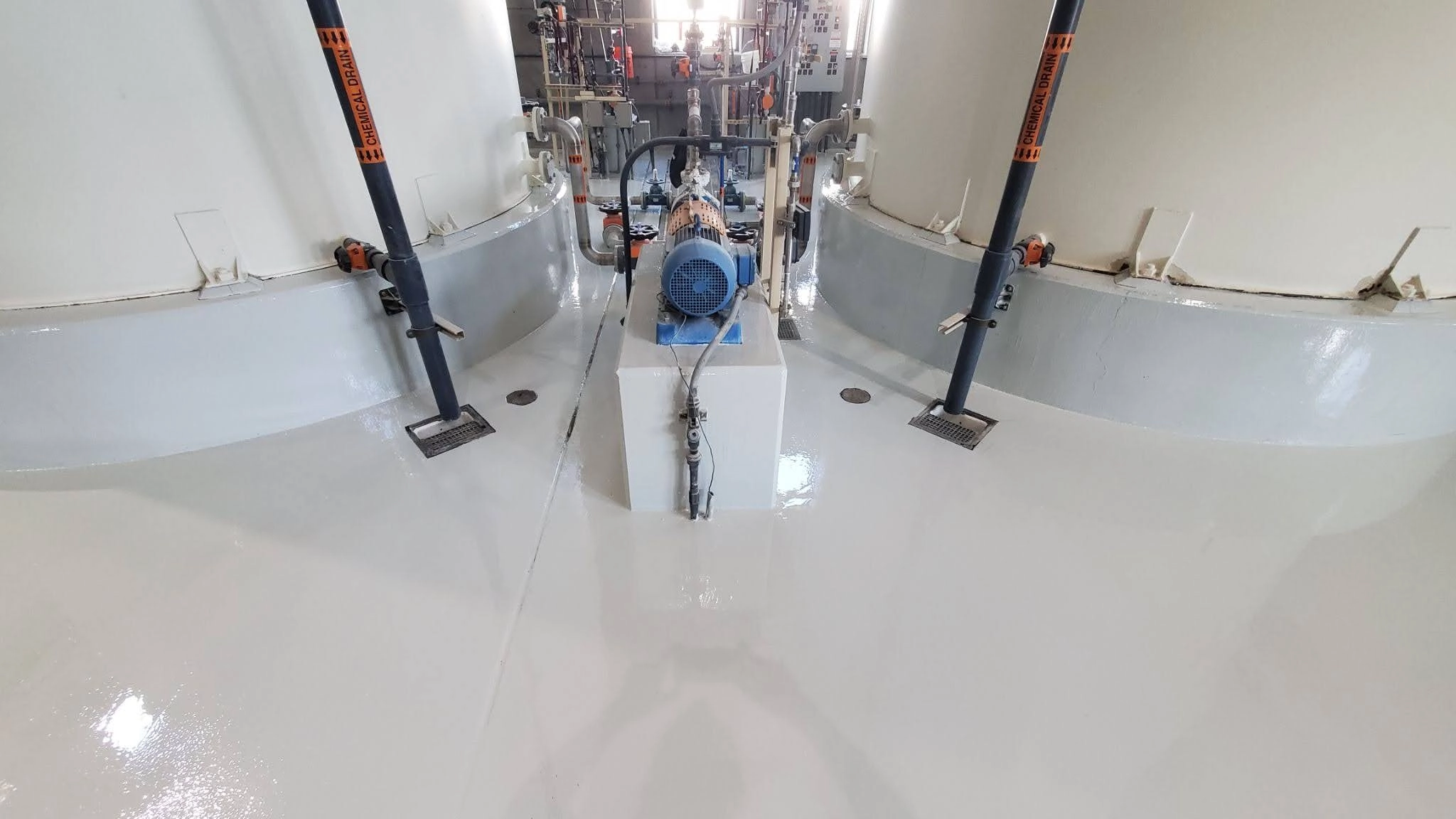
The Central Valley is one of the most productive wine and grape growing regions in the country, and that shows up directly in the kind of flooring local wineries and beverage producers actually need. Wine and juice are more aggressive on a floor than most people expect, and a standard commercial coating often isn’t built for the exposure a working winery puts it through.
Here’s what makes winery and beverage production flooring its own category, and what to plan for in a Fresno County facility, including operations around wine-growing communities like Reedley.
Why Wine and Juice Exposure Is Tough on Standard Coatings
Wine and grape juice are acidic, and that acidity, combined with sugar content and near-constant moisture during crush season, breaks down coatings that aren’t specifically formulated to resist it. A floor that handles typical commercial traffic without issue can stain, etch, or degrade faster than expected once it’s exposed to daily wine and juice contact.
Staining is a particularly visible problem. Red wine in particular can permanently discolor an unsealed or lightly sealed concrete surface, which matters both for appearance in a tasting room and for the sanitary condition of a production floor.
Water Discharge Rules That Touch Winery Flooring Decisions
Winery process water, meaning the wastewater generated from crushing, fermentation, cleaning, and other production steps, is regulated under California’s statewide Winery Order, administered by the State Water Resources Control Board. Facilities that discharge process water to land, including through onsite ponds or land application areas, generally need to enroll if they exceed the order’s volume thresholds.
That regulation doesn’t govern flooring materials directly, but it does shape how a winery’s floors need to drain and how process water gets managed on its way out of the building, which is worth factoring into a flooring and drainage plan rather than treating the two as separate projects.
Barrel Rooms, Crush Pads, and Tasting Rooms Each Need Something Different
Crush pads and fermentation areas see the heaviest chemical exposure and the most frequent high-pressure wash-down, which calls for a heavy-duty, acid-resistant system with slope and drainage built in from the start.
Barrel rooms deal with less acute chemical exposure but constant humidity and temperature control needs, along with the weight of stacked barrels concentrated on specific floor areas. A durable, moisture-tolerant system matters here even though the day-to-day chemical load is lighter than a crush pad.
Tasting rooms prioritize a different set of concerns entirely: appearance, wine stain resistance, and comfort for visitors standing for extended periods, which usually points toward a decorative but still chemically resistant system rather than the heavy-duty build used in production areas.
Planning Around Harvest Season
Like most agricultural operations, wineries have a narrow window outside of harvest and crush season when a flooring project can happen without disrupting the busiest, highest-revenue part of the year. Scheduling installation for the off-season, rather than trying to fit it in during or right before crush, avoids competing with the facility’s most critical operational period.
Phased installation across barrel rooms, crush pads, and tasting rooms at different times can also help spread a larger project across the calendar in a way that minimizes disruption to any single part of the operation.
Specifying the Right System for Your Facility
Winery and beverage production flooring isn’t a place to assume a standard commercial system will hold up. The combination of acid exposure, staining risk, and zone-specific demands calls for a system chosen with the actual production process in mind.
If you’re planning a flooring project for a winery, tasting room, or beverage production facility in Fresno County, contact Fresno Epoxy Crew to schedule a free on-site evaluation. We’ll walk your facility zone by zone and recommend systems suited to what each space actually handles.
FAQ
Can red wine permanently stain a concrete or epoxy floor? Unsealed or lightly sealed concrete is vulnerable to permanent wine staining, but a properly specified, chemically resistant coating system significantly reduces that risk compared to bare or under-sealed concrete.
Does a winery need different flooring in every room? Generally yes. Crush pads and fermentation areas need heavy-duty, acid-resistant systems with strong drainage, while tasting rooms can prioritize appearance and comfort alongside chemical resistance.
When is the best time to schedule a winery flooring project? The off-season, outside of harvest and crush, is generally the best window, since it avoids disrupting the facility’s busiest and most revenue-critical period of the year.