
Madera property owners have more flooring options than ever, but concrete continues to stand out as one of the most practical and versatile choices available for both residential and commercial spaces. From homes in established Madera neighborhoods to agricultural processing facilities and retail businesses along the Highway 99 corridor, concrete flooring delivers a combination of durability, design flexibility, and long-term value that few other materials can match under Central Valley conditions. In our work throughout Madera, we see the full range of what concrete flooring can accomplish when the right finish is selected, the installation is done correctly, and the floor is maintained consistently. This guide covers the key options, the decisions that matter most, and what Madera property owners should know before moving forward. Our polished concrete flooring services are one part of a broader range of concrete solutions we bring to properties throughout the area.
Key Benefits of Concrete Flooring for Homes and Businesses
The case for concrete flooring starts with the characteristics that make it genuinely useful in real-world conditions rather than just appealing in a showroom.
Durability is the foundation of that case. Properly installed and finished concrete withstands the demands of heavy foot traffic, equipment loads, furniture movement, and the kind of daily use that degrades softer flooring materials over time. In Madera’s commercial and industrial environments, where floors are subjected to sustained stress year-round, that durability translates directly into longer replacement cycles and lower long-term costs.
Low maintenance is the practical companion to durability. Concrete floors do not require the periodic replacement, refinishing, or specialized treatment that other flooring types demand. Regular sweeping and mopping with appropriate products is sufficient to maintain most concrete floor systems in excellent condition over many years.
Design flexibility is often underestimated by property owners who associate concrete with utilitarian gray slabs. Modern concrete finishing options produce surfaces that range from sleek and contemporary to warm and textured, with color, pattern, and surface treatment choices that accommodate virtually any aesthetic direction.
Energy efficiency is a benefit that becomes meaningful over time. Concrete’s thermal mass absorbs heat during the day and releases it gradually, helping to moderate indoor temperatures in both summer and winter. In Madera’s climate, where cooling loads during summer are substantial, thermal regulation contributes to lower energy consumption and reduced utility costs.
Popular Concrete Flooring Types Available in Madera, CA
Understanding the concrete flooring options available helps property owners match the right system to their specific space and use requirements.
Polished Concrete is the most refined of the concrete finishing options, producing a smooth, high-gloss surface through a multi-stage grinding and polishing process. The result is a floor that looks sophisticated and intentional, reflects light effectively, and requires minimal ongoing maintenance. Polished concrete is well suited to retail spaces, offices, and residential interiors where appearance is a primary consideration alongside durability.
Stained Concrete introduces color and visual depth to an otherwise neutral surface. Acid stains react chemically with the concrete to create variegated, translucent color effects that are unique to each floor. Water-based stains offer a broader color palette with more consistent, opaque results. Stained concrete is popular in both residential and commercial settings where a distinctive appearance is the goal without sacrificing the performance benefits of concrete.
Textured Concrete adds surface relief through stamping, brooming, or aggregate exposure techniques. The texture provides visual interest and, importantly, additional slip resistance for outdoor surfaces and areas where wet conditions are a regular concern. Based on what we see in Madera, CA properties, textured concrete is a practical choice for exterior patios, pool surrounds, and commercial entries where safety and durability both matter.
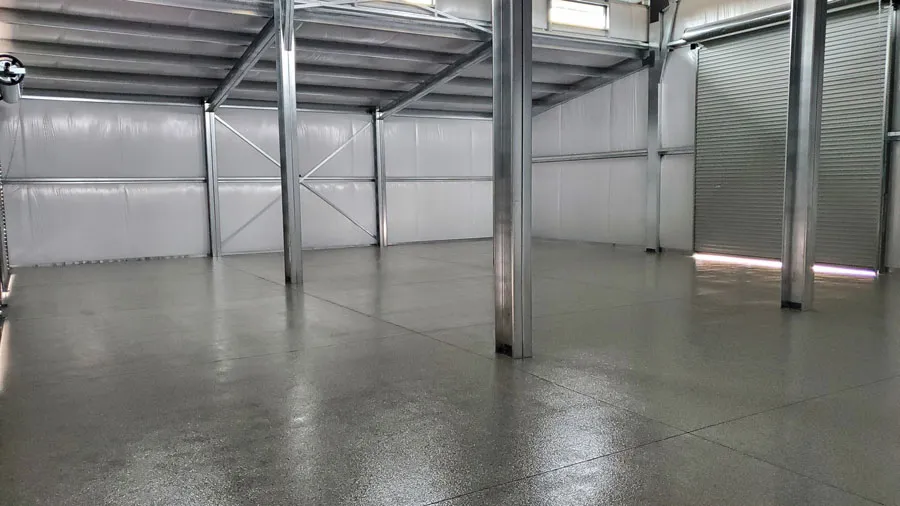
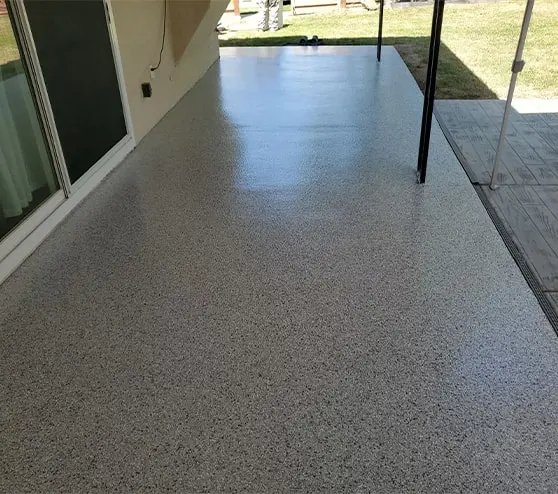
Epoxy Flooring stands apart as a coating system applied over existing concrete rather than a finish worked into the surface itself. It delivers exceptional chemical resistance, stain resistance, and durability under heavy use, making it the preferred choice for garages, warehouses, commercial kitchens, and industrial facilities. The seamless surface is easy to clean and maintain, and the range of colors and decorative options available allows for a finished appearance that is both professional and visually appealing.
Choosing the Right Concrete Finish for Your Space
Selecting the right concrete finish requires honest assessment of how the space is actually used, what performance characteristics the floor needs to deliver, and how much ongoing maintenance the property owner is prepared to commit to.
Purpose and use intensity should drive the initial decision. High-traffic commercial areas and spaces subject to chemical or moisture exposure need a finish that prioritizes performance. Polished concrete and epoxy both serve these environments well, though they do so through different mechanisms. Residential living spaces and lower-traffic commercial interiors have more flexibility to prioritize aesthetics, making stained and decorative finishes viable options alongside polished and epoxy systems.
Maintenance commitment is a practical filter. Some finishes require more frequent attention than others to maintain their appearance and protective function. Polished concrete requires periodic re-densification and burnishing to maintain its gloss level. Epoxy requires occasional inspection and prompt attention to any areas where the coating shows wear or damage. Stained concrete needs periodic resealing to protect the color and prevent moisture infiltration. Understanding what each finish requires before selecting it prevents the frustration of a floor that looks great initially but deteriorates because the maintenance demands were not anticipated.
Aesthetic direction is the final consideration once performance and maintenance requirements are satisfied. For facilities where performance standards are highest and heavy use is the daily reality, industrial epoxy floor coating delivers the durability and surface integrity those conditions demand alongside a professional finished appearance.
Essential Maintenance Tips for Extending the Life of Your Concrete Floors
Consistent maintenance is what separates a concrete floor that looks and performs well for decades from one that shows its age within a few years. The principles are straightforward, and the effort required is manageable when incorporated into a regular routine.
Regular cleaning prevents the accumulation of abrasive debris that scratches and dulls concrete floor surfaces over time. Sweeping or vacuuming removes particulate before it can be ground into the surface under foot traffic. Mopping with a pH-neutral cleaner handles the deeper cleaning that sweeping alone cannot accomplish. Acidic or strongly alkaline cleaning products should be avoided, as they can affect the surface chemistry of both the concrete and any applied finish system.
Periodic sealing protects against moisture infiltration and surface staining. The appropriate resealing interval depends on the finish type and the level of traffic the floor receives, but most concrete floor systems benefit from sealant reapplication every few years. This step maintains the protective barrier that slows surface wear and prevents moisture from cycling through the slab.
Prompt crack and chip repair keeps minor surface damage from developing into more significant structural conditions. Small cracks addressed early are simple, low-cost repairs. The same cracks ignored through multiple seasons of thermal cycling and moisture exposure become larger, more complex problems. For existing crack damage that needs professional treatment before any new finish is applied, concrete crack repair addresses the substrate conditions that affect how any finish system performs over the long term.
Entry mats at access points reduce the amount of grit and debris tracked onto finished concrete surfaces from outside. This simple measure concentrates wear at the mat rather than distributing it across the floor, meaningfully extending the life of the finish in high-entry-traffic areas.
Avoiding harsh chemicals and abrasive tools protects the surface finish from damage that routine cleaning should never cause. The right cleaning products and methods for each finish type are straightforward, and using them consistently is one of the easiest ways to protect the investment made in the floor.
What Will Concrete Flooring Cost You in Madera, CA?
Concrete flooring costs in Madera, CA, vary based on several factors, and understanding those factors helps property owners plan accurately and compare options meaningfully.
Material costs reflect the complexity of the chosen finish. Basic concrete poured and left with a standard broom finish is the most economical option. Decorative finishes like polishing, staining, and epoxy coating involve additional materials and process steps that increase the material cost component of the project. The performance and longevity benefits of higher-end finishes typically justify the additional investment over the replacement cycle of the floor.
Labor expenses are directly tied to the skill and time required for each finish type. Polishing, staining, and epoxy application all require trained professionals with specific equipment and process knowledge. The labor cost reflects the expertise being applied, and attempting to reduce this component by using less experienced contractors typically results in a finished product that does not perform or look as intended.
Floor preparation is a cost variable that is often underestimated in planning. Existing floors that require crack repair, grinding, or removal of previous coatings before a new finish can be applied increase the preparation scope and the associated cost. Professional assessment of the current floor condition before project planning begins prevents budget surprises. For floors where seam and joint damage needs to be addressed alongside surface preparation, commercial seam and joint filler work completed as part of the preparation scope ensures the substrate is fully ready for the chosen finish system.
Additional features such as decorative aggregates, anti-slip additives, color customization, and multiple coating layers add cost while also adding performance characteristics and visual value that may be essential for the intended application.
Finding the Right Concrete Flooring Solution for Your Madera Property
The right concrete flooring decision for a Madera property is one that aligns the finish type with the actual demands of the space, the maintenance commitment the property owner can sustain, and the aesthetic direction they want to achieve. All three factors need to work together for the floor to deliver on its potential over the long term.
Whether you are planning a new installation, upgrading an existing floor, or addressing damage that has accumulated over time, professional guidance from the assessment phase through installation makes a meaningful difference in the outcome. Contact our team today to schedule a consultation with Fresno Epoxy Crew™ and find the right concrete flooring solution for your Madera home or business.