
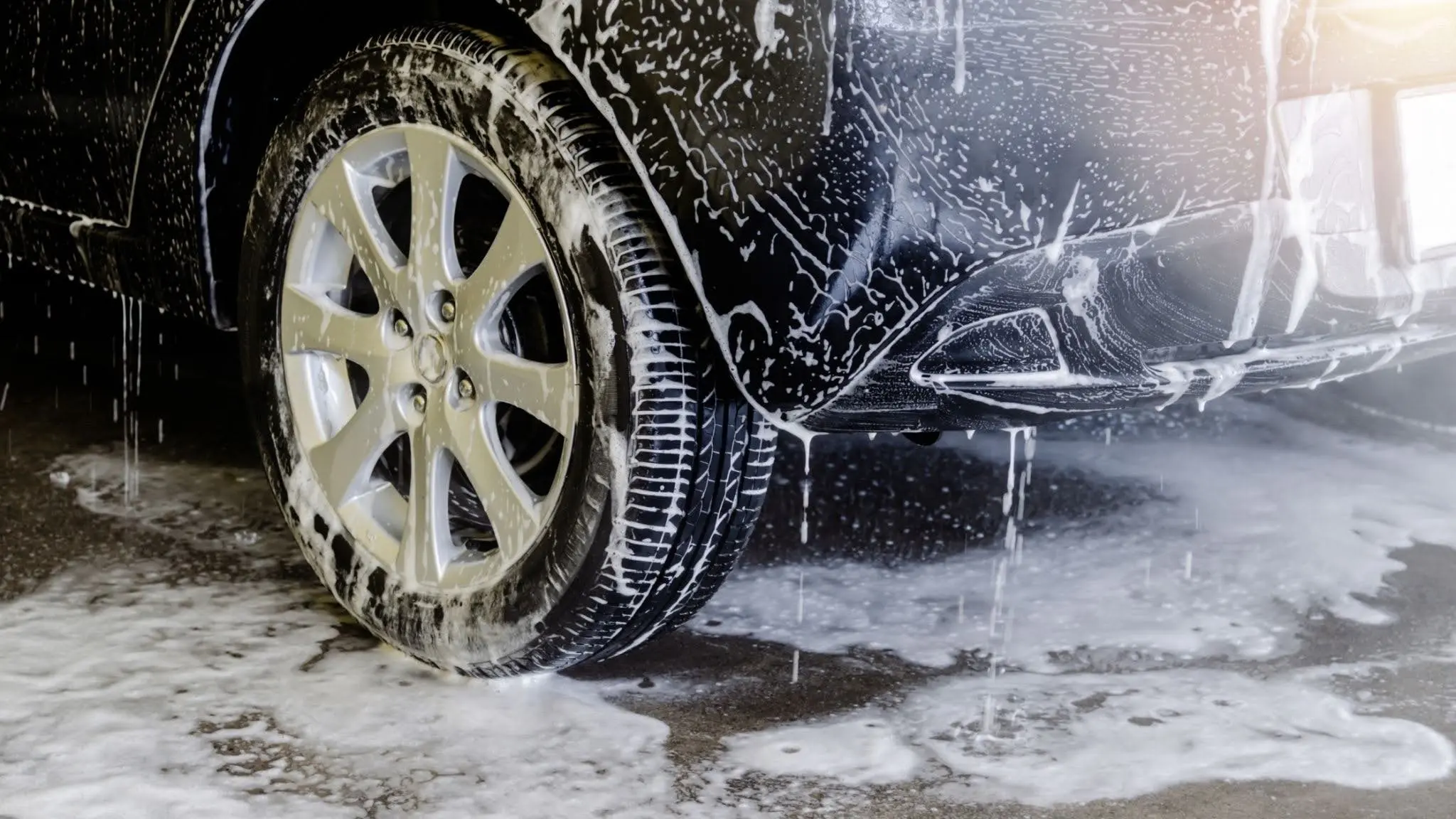
A car wash floor sits wet for most of its working life. That single fact separates it from almost every other commercial flooring category, since most floors deal with occasional spills rather than near-constant standing water, humidity, and chemical exposure.
In California, there’s a second layer to this that most owners don’t think about until they’re already deep into a project: a state law tying water recycling directly to how the building itself gets designed. That’s true whether the facility sits in Fresno County proper or a nearby community like Visalia.
Why Car Wash Floors Are a Different Category
Self-service bays, conveyor tunnels, and in-bay automatics all put a floor through repeated wet and dry cycles throughout the day, often combined with hot water, steam, and a rotating mix of soaps, waxes, and degreasing chemicals. That combination is harder on a coating than the occasional spill a typical industrial epoxy flooring system is built around.
Standing water also raises the risk of moisture getting trapped beneath a coating rather than just sitting on top of it, which is a leading cause of the bubbling and delamination that shows up in floors not specifically built for constant wet exposure.
California’s Water Recycling Law and What It Means for Your Floor
Under California Water Code Section 10951, any in-bay or conveyor car wash permitted and constructed after January 1, 2014 has to either install and maintain a water recycling system that reuses at least 60 percent of its wash and rinse water, or purchase recycled water that meets that same 60 percent threshold.
That requirement isn’t just a plumbing question. A water recycling system depends on the floor sloping correctly toward trench drains and sumps that feed the reclaim system, which means the flooring plan and the water recycling plan are really the same project, not two separate ones. Getting the slope and drain placement wrong the first time turns a straightforward coating job into a much bigger concrete rework later.
Choosing a Coating System That Can Handle Standing Water
A car wash floor needs a system formulated for constant moisture exposure, not just occasional spills. That generally means a coating with strong resistance to moisture vapor transmission from below, paired with a topcoat that can handle repeated hot water and chemical contact without breaking down.
Coatings that aren’t rated for this kind of exposure tend to fail from the inside out, losing adhesion to the slab long before the surface itself looks worn. That kind of failure often leads to a full concrete repair project rather than a simple recoat, which is why a system built for dry commercial traffic is usually the wrong choice for a wash bay.
Slope, Trenches, and Drains: Getting the Design Right the First Time
Every wash bay needs to slope toward its drainage points, both to keep water from pooling on the surface and to feed the water recycling system the state now requires for newer facilities. That slope has to be built into the concrete and coating system together, since a coating applied over an improperly sloped slab won’t fix a drainage problem on its own.
Retrofitting slope and drainage after a floor is already coated is significantly more expensive than planning it correctly from the start, which is why this is one of the first things worth discussing with a contractor before any coating decisions get made.
Self-Service vs. Conveyor vs. In-Bay: Different Wear Patterns
Self-service bays see concentrated wear from high-pressure wands and foot traffic in specific spots, while conveyor tunnels deal with constant belt movement and near-continuous chemical exposure across the entire length of the tunnel.
In-bay automatics cycle between wet washing and dry idle time, with additional wear from the brush or touchless equipment moving across the same section of floor repeatedly. Each of these calls for slightly different thickness and texture in the coating system to match how that specific bay actually gets used.
Getting a Car Wash Floor Built to Last
A car wash floor has to do more than survive water. It has to work with the drainage and recycling system the building depends on, both for compliance and for keeping the floor itself from failing prematurely.
If you’re planning a flooring project for a car wash in Fresno County, contact Fresno Epoxy Crew to schedule a free on-site evaluation. We’ll look at your drainage plan alongside your coating needs before recommending a system.
FAQ
Does every car wash in California have to recycle water? The 60 percent recycling requirement applies specifically to in-bay and conveyor car washes permitted and constructed after January 1, 2014, not to self-service car washes or older facilities built before that date.
Can an existing car wash floor be retrofitted for better drainage? In many cases yes, though retrofitting slope and drain placement after a floor is already in place is a larger and more expensive project than getting the design right during initial construction or a full recoat.
Why do some car wash floors fail faster than others? Floors coated with a system built for dry commercial traffic rather than constant moisture exposure tend to fail from trapped moisture and lost adhesion, well before the visible surface shows significant wear.